The Deliberate Eye: Why the Finest Collections Are Built in Unhurried Time
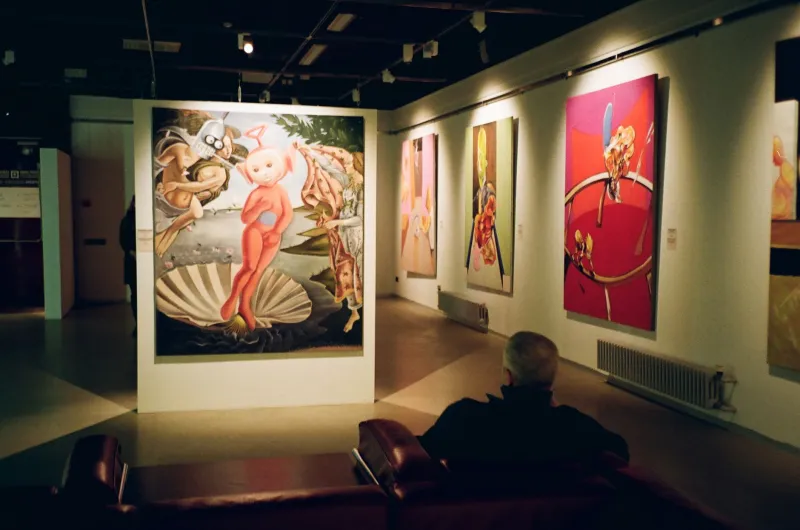
Against the Urgency
The contemporary art market is extraordinarily good at manufacturing pressure. Edition sizes are announced as nearly exhausted. Fair booths are arranged to suggest that the work before you will not survive the opening weekend. Galleries speak of waitlists with a tone that implies the list is closing even as the conversation proceeds. The cumulative effect is an atmosphere in which delay feels like failure—as though the collector who pauses to think has already lost something irreplaceable.
This atmosphere is, in large part, a construction. And the collector who learns to see through it gains access to a fundamentally different mode of building a collection—one grounded not in the anxiety of scarcity but in the confidence of sustained, unhurried attention.
What Patience Actually Permits
To collect slowly is not to collect passively. It is, rather, to insist on a different kind of engagement with the work and with the artists who make it. The patient collector spends time with a work before acquiring it—returning to the gallery, sitting with a reproduction, allowing the initial impression to either deepen or dissolve. This process filters out a remarkable proportion of the acquisitions that, made in haste, would later feel like errors in judgment.
More significantly, patience permits the collector to develop a genuine relationship with an artist across time. A single studio visit offers a snapshot; a relationship built over several years offers something far more valuable—an understanding of how an artist thinks, what concerns animate their practice, how they respond to difficulty, and where their work is genuinely heading rather than where it appears to be heading at any given moment.
This depth of understanding transforms the act of acquisition. When a collector who has followed an artist for three or four years chooses to acquire a particular work, that choice is informed by a context that no amount of critical reading or gallery conversation can fully replicate. The work enters the collection carrying meaning that was accumulated slowly, through attention and relationship, and that meaning does not depreciate.
The Room as Teacher
There is another dimension to patience-based collecting that receives insufficient attention: the importance of allowing existing works to teach you before adding new ones. A collection that grows too quickly rarely achieves coherence, because coherence requires time—time for the collector to understand how works speak to one another, which juxtapositions illuminate and which obscure, what the collection as a whole is beginning to say.
Many experienced collectors describe a practice of deliberate restraint: after a significant acquisition, they impose an informal moratorium on new purchases, sometimes lasting a year or more. During this period, the new work settles into the collection, the collection settles into the space, and the collector's eye recalibrates. What emerges from this process is a clarity about what is genuinely needed—and, equally important, what is not.
This approach runs directly counter to the accumulative logic that drives much of the contemporary market, which tends to treat the collection as a project that is always incomplete and always in need of additions. The patient collector understands the collection as a living arrangement that requires not constant expansion but constant attention.
Urgency Culture and Its Costs
The costs of urgency-driven collecting are not always immediately visible, but they accumulate. Collections assembled quickly tend to reflect the enthusiasms of particular market moments rather than the sustained vision of a discerning individual. They contain works that seemed essential under the pressure of a fair booth or a gallery opening but that, in the quieter light of a living room or a library, reveal themselves as peripheral.
More subtly, rushed acquisitions tend to produce a kind of collector's fatigue—a sense that the collection is always slightly ahead of the collector's ability to understand it, always demanding the next addition before the last has been fully absorbed. This is not collecting as a contemplative practice; it is collecting as consumption, and the distinction matters enormously for the long-term satisfaction and coherence of what is built.
The financial dimension is worth noting as well. Collectors who acquire under pressure—whether the pressure of scarcity messaging, peer competition, or the fear of missing a market moment—are more likely to acquire work that does not hold its value, because they are responding to market signals rather than to genuine artistic merit evaluated over time. The patient collector, by contrast, tends to make fewer but better-considered acquisitions, and those acquisitions tend to reflect enduring qualities in the work rather than the temporary enthusiasms of a particular season.
Slowness as Sophistication
There is a certain social currency in the contemporary art world attached to speed—to being the first to identify an artist, to being present at the opening, to having acquired before the waitlist formed. This currency is real but shallow. The collectors whose collections command lasting respect are almost never those who moved fastest; they are those who looked most carefully, maintained the most consistent vision, and built relationships with artists that extended beyond the transaction.
Patience, in this context, is not the absence of ambition. It is a form of discipline—the discipline to resist the market's manufactured urgency long enough to hear what the work is actually saying. It is the willingness to return to the same painting three times before deciding, to follow an artist for two years before acquiring, to let a gap in the collection remain a gap until the right work presents itself rather than filling it with something merely adequate.
The collections that endure are built by collectors who understood that time spent looking is never time wasted. In a market that profits from impatience, the deliberate eye remains the collector's most reliable instrument.