Beyond the Single Medium: How Visionary Collectors Are Redefining What It Means to Follow an Artist
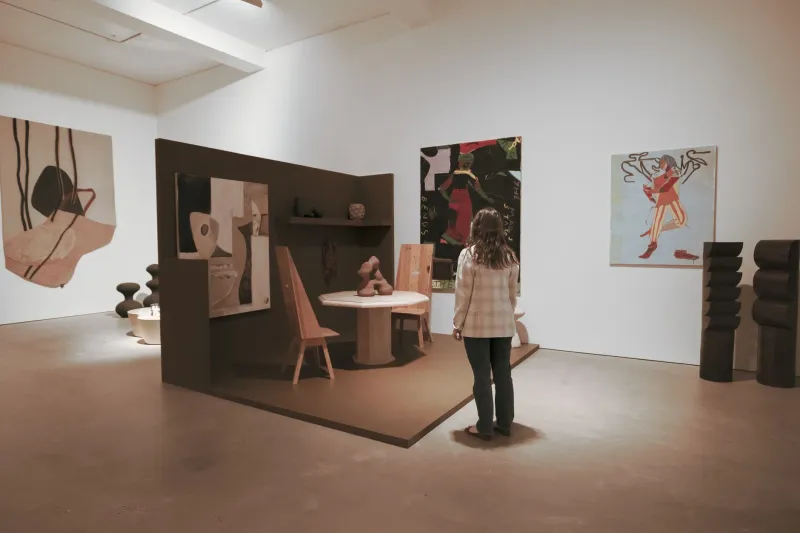
There is a particular kind of collection that announces itself the moment you enter the room. Not because it is loud or overwhelming, but because it possesses an unmistakable coherence—a sense that every object present is in conversation with every other, that the space has been organized around a consistent intelligence rather than a category or a period. These collections tend to have something in common: they were built around artists, not mediums.
This distinction matters more than it might initially appear. The collector who limits their acquisitions to a single medium—paintings only, say, or works on paper—is making a choice that is legible and defensible, but ultimately limiting. They are, in effect, deciding that the form of an artist's expression is more important than the content of their vision. For a new generation of American collectors, that trade-off is increasingly difficult to justify.
The Medium as Vehicle, Not Destination
Artists have always moved between forms. What has changed is the degree to which collectors are willing to follow them there.
For much of the twentieth century, the art market rewarded medium specialization. Galleries developed reputations around specific categories—photography, works on paper, contemporary sculpture—and collectors who worked within those categories benefited from the institutional infrastructure that organized them. There was logic to this arrangement. Medium categories provided a framework for comparison, valuation, and expertise that made navigating the market more manageable.
But this framework also imposed a kind of artificial constraint on how collectors understood artistic practice. An artist who worked primarily in painting but produced significant sculptures, drawings, and site-specific installations was, in the medium-specialist model, most fully represented by their canvases. The rest was supplementary—interesting, perhaps, but not the main event.
Contemporary artists have made this position increasingly untenable. The studio practice of many of the most significant figures working in the United States today is deliberately multi-modal. Painting informs sculpture. Drawing generates ideas that become installations. Video work explores temporal dimensions that static objects cannot reach. To collect only one strand of this practice is to misread it fundamentally.
What Multi-Medium Collecting Reveals
When a collector acquires work across multiple mediums from a single artist, something interesting happens: the individual pieces begin to illuminate one another in ways that no single work can achieve alone. A collector who owns both paintings and sculptures by the same artist can observe how spatial thinking in three dimensions informs compositional decisions on the canvas. The drawing practice, if present, often reveals the underlying logic that drives both.
This kind of cross-medium dialogue within a collection is not merely intellectually satisfying—though it is that. It also tends to produce a deeper and more durable relationship with the artist's work. The collector who has followed an artist across mediums has, in a real sense, traced the development of a creative intelligence rather than simply accumulated pleasing objects.
There is a practical dimension to this as well. Artists whose practices span multiple mediums are often more resilient in terms of critical and market relevance. Their work cannot be easily categorized or dismissed, and their collectors benefit from that complexity. A collection organized around an artist's vision rather than their medium is less vulnerable to the cyclical enthusiasms and dismissals that characterize medium-specific collecting trends.
The Challenge of Coherence
Building a multi-medium collection around a single artist's vision is not without its difficulties. The most immediate challenge is physical: a collection that includes large-scale paintings, freestanding sculptures, and delicate works on paper makes significant demands on the spaces that house it. Installation requirements vary dramatically across mediums, and what works beautifully in one context may be entirely inappropriate in another.
There is also the question of valuation. Different mediums carry different market weights for the same artist, and collectors navigating a multi-medium practice must develop a more nuanced understanding of how the market values each form relative to the others. Prints and works on paper, for instance, typically carry lower price points than unique paintings or sculptures—but this does not mean they are less central to the artist's practice. A collector who acquires across mediums must resist the temptation to equate market value with artistic significance.
Perhaps the most subtle challenge is maintaining a coherent collecting philosophy across mediums without becoming merely encyclopedic. There is a meaningful difference between a collection that thoughtfully represents an artist's full practice and one that simply accumulates everything available. The former reflects genuine engagement with the artist's vision. The latter reflects a different kind of impulse—one that is more about completeness than comprehension.
Conversations That Span Forms
The most sophisticated multi-medium collections in the United States today tend to be organized around what might be called conceptual threads—recurring ideas, preoccupations, or formal questions that an artist pursues across different materials and formats. A collector who has identified these threads can make acquisitions that are genuinely selective even within a broad medium range, choosing works that illuminate the central concerns of the practice rather than simply representing its variety.
This requires a level of engagement with an artist's thinking that goes beyond what most gallery relationships provide. It typically involves studio visits, extended conversations with the artist, and a sustained attention to how the practice develops over time. It is, in other words, the kind of collecting that is less about acquisition and more about relationship—with the work, with the artist, and with the ideas that animate both.
A More Complete Vision
The shift toward multi-medium collecting reflects something broader about how serious collectors are coming to understand their role. The collector who limits themselves to a single medium is, in a sense, editing the artist—deciding which aspect of their practice is worthy of sustained attention and which can be safely ignored. The collector who follows an artist across forms is doing something quite different: they are accepting the artist's practice on its own terms, engaging with it in its full complexity, and allowing that complexity to shape the collection itself.
This is a more demanding form of collecting. It requires greater knowledge, greater flexibility, and a willingness to live with objects that may not immediately cohere in the way that a medium-specific collection does. But it also produces collections of a different order entirely—collections that reflect not merely taste, but genuine intellectual engagement with the creative vision they represent.
For collectors who aspire to build holdings of lasting consequence, that distinction is not incidental. It is the point.