Return Visits: The Underrated Practice That Sharpens a Collector's Eye Over Time
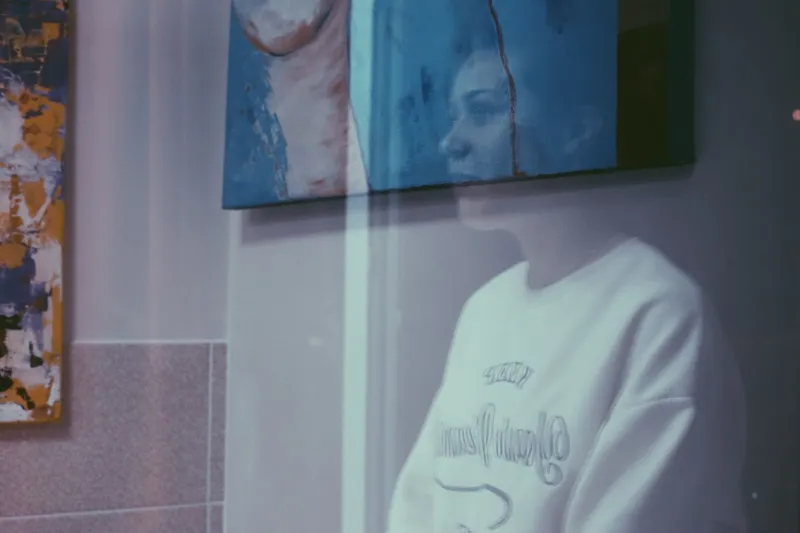
There is a moment, familiar to many collectors, when a work that has hung on the same wall for several years suddenly appears different. Nothing about the object has changed. The light falls on it as it always has. And yet something has shifted—a compositional tension that previously went unnoticed, a chromatic relationship that now seems to speak directly to a question the viewer has only recently begun to ask. The work has not changed. The collector has.
This experience—the second look, or more accurately the hundredth look arriving at last as a genuine encounter—is among the most valuable phenomena available to anyone who lives seriously with original art. It is also, in the current climate of constant acquisition and ceaseless market activity, one of the most consistently undervalued.
The Acquisition Impulse and Its Limits
Contemporary collecting culture is oriented, almost entirely, toward the new. Fairs, auction previews, gallery openings, studio visit programs: the infrastructure of the art world is designed to move collectors toward the next acquisition. There is nothing inherently wrong with this orientation—discovery is one of collecting's genuine pleasures—but it carries a cost that is rarely acknowledged.
When attention is perpetually directed outward, toward the next work rather than the ones already owned, a collector misses something essential: the slow revelation that comes only from sustained cohabitation with art. A painting encountered at a fair and purchased on the strength of that initial impression is, in some meaningful sense, not yet fully known. It takes time—months, sometimes years—for a work to disclose its full range of qualities, and that disclosure requires a kind of attentive patience that the acquisition cycle actively discourages.
The collectors who develop the most refined sensibilities are, almost without exception, those who have learned to balance the outward movement of discovery with an equally deliberate inward practice of return.
What Revisiting Reveals
The insights that emerge from sustained engagement with familiar works tend to fall into two broad categories: those that illuminate the art, and those that illuminate the collector.
On the first front, works revisited with fresh attention often reveal dimensions of craft, intention, and meaning that initial enthusiasm obscured. A painting acquired for its immediate visual impact may, over time, disclose a more complex spatial logic, a subtle narrative undercurrent, or an unexpected relationship between surface and depth. These discoveries are not available to the casual viewer; they accrue through repeated, patient attention.
A collector in New York who has spent three decades building a focused collection of works on paper describes the practice in precise terms: "I make a point of sitting with one piece for thirty minutes every few weeks—no phone, no agenda. What I notice after five years of that is entirely different from what I noticed in the first month. The work keeps teaching me things I wasn't ready to learn earlier."
On the second front—the self-revelatory dimension—revisiting early acquisitions offers a uniquely honest account of how a collector's taste has evolved. Works purchased in the first years of a collecting practice often reflect enthusiasms that later strike the collector as naive, or alternatively, as more instinctively correct than subsequent, more considered choices. Both realizations are instructive.
The Discipline of Periodic Re-Evaluation
Building a reflective practice around an existing collection need not be elaborate. Several approaches have proven useful among experienced collectors.
Scheduled engagement. Setting aside time—monthly, quarterly—to engage with individual works outside the context of entertaining or daily domestic life creates the conditions for genuine attention. The work deserves to be seen, not merely lived alongside.
Written reflection. Keeping brief notes on evolving responses to specific works creates a longitudinal record that is both personally illuminating and practically useful. Over time, these notes reveal patterns in taste development that would otherwise remain invisible.
Rotational display. Moving works between rooms, or periodically returning stored pieces to display, resets the viewer's relationship with familiar objects. A painting encountered in a new context—different light, different neighbors on the wall—often appears genuinely transformed.
Comparative review. Placing early acquisitions alongside more recent ones invites a kind of internal conversation about direction, coherence, and the underlying logic of the collection as a whole. Discrepancies that emerge from this exercise are not necessarily failures; they are data.
Re-Evaluation as a Brake on Impulsive Collecting
There is a practical benefit to this reflective discipline that deserves direct acknowledgment: it tends to slow the acquisition impulse in productive ways. A collector who is genuinely engaged with the works already in their possession is less susceptible to the novelty-driven purchasing that produces collections that are broad but shallow, numerous but incoherent.
This is not an argument against acquisition. It is an argument for acquisition that is grounded in genuine understanding rather than momentary enthusiasm. The collector who knows, through sustained engagement, exactly what their collection is doing—what tensions it holds, what conversations it is conducting, what gaps remain genuinely unfilled—is far better positioned to make acquisitions that strengthen rather than dilute.
The Artist's Perspective
It is worth noting that the practice of revisiting has a direct parallel in the studio. Artists who develop significant bodies of work over time are almost always those who maintain an active, critical relationship with their own earlier output—returning to prior concerns with new tools, new questions, new technical capacities. The willingness to look again, to resist the assumption that a problem has been solved or a territory exhausted, is a defining characteristic of serious artistic practice.
Collectors who cultivate the same discipline find themselves, over time, developing a more nuanced understanding of artistic development itself. They begin to recognize, in the works they own, evidence of the same processes they observe in the studios they visit—the accumulation of decisions, revisions, and discoveries that constitute a genuine creative practice.
That recognition is, in the end, what separates a collection from an inventory. It is the difference between objects acquired and works understood—and it is available to any collector willing to look again.