The Room That Reflects You: Making the Case for Collecting Art on Your Own Terms
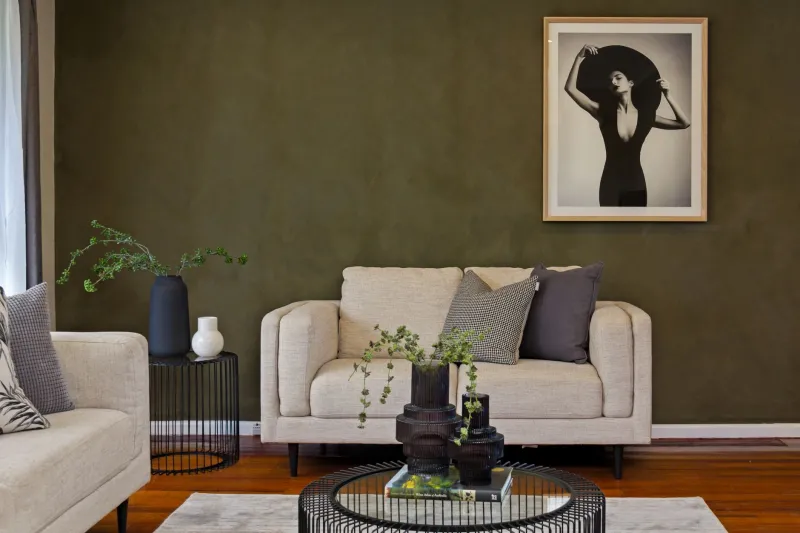
Somewhere along the way, a well-intentioned idea became a damaging orthodoxy. The idea was that art collecting could be approached systematically—that with the right data, the right advisors, and the right awareness of market movements, a collector could optimize their acquisitions the way one might optimize a securities portfolio. The orthodoxy that followed was subtler and more corrosive: that personal taste was a liability, a source of bias that sophisticated collectors should learn to override.
This essay argues the opposite.
The most enduring private collections in American cultural life—the ones that eventually find their way into museum wings, that define the reputations of the collectors who built them, that are discussed decades after the original acquisitions—were not built on market intelligence alone. They were built on conviction. On genuine, sometimes unfashionable, occasionally eccentric love for specific artists and specific works.
What Trend-Chasing Actually Costs You
The art market, like most markets, has its cycles. Certain movements, mediums, and aesthetics command intense attention for a period, then recede. Collectors who chase these cycles often find themselves acquiring work at peak enthusiasm and holding it through the inevitable correction. The financial logic is already questionable. But the personal cost is less frequently discussed.
A collection assembled primarily in response to external signals tends to feel like a collection assembled by someone else. The works may be accomplished. They may even be valuable. But they do not cohere in the way that collections built on authentic preference cohere—that quality of a room that feels inhabited, that reveals something true about the person who chose each piece.
There is also a practical dimension worth considering. Collectors who purchase work they do not genuinely love tend to sell it more readily when the market softens or when the next trend announces itself. This cycle of acquisition and disposal is expensive and rarely produces the long-term results that patient holding does. Genuine attachment is, among other things, a hedge against impulsive decision-making.
The Myth of the Infallible Expert
American collectors are sometimes encouraged to defer extensively to gallerists, advisors, and critics—to treat the cultivation of personal taste as a project that can be indefinitely deferred in favor of expert guidance. There is real value in informed counsel. But there is a meaningful difference between using expertise to deepen your own understanding and using it to substitute for judgment you have not yet developed.
The collectors who matter—who leave behind collections that matter—eventually develop a point of view that is genuinely their own. They have absorbed the history of the field, spent time in front of significant works, engaged seriously with artists and ideas. And then they have trusted what they found there.
This does not mean ignoring expertise. It means using it to sharpen a sensibility rather than replace one.
Authentic Taste and Financial Outcomes
There is a persistent assumption that collecting for love and collecting for value are fundamentally opposed strategies—that the collector who follows genuine enthusiasm is sacrificing financial prudence on the altar of sentiment. The historical record suggests otherwise.
Consider the American collectors of Abstract Expressionism in the 1940s and 1950s who acquired work by artists then considered marginal, difficult, and commercially uncertain. They were not following market consensus. They were following a response to work they found genuinely moving and important. The financial outcomes, decades later, were extraordinary—but they were a consequence of authentic engagement, not a substitute for it.
More recently, collectors who developed real enthusiasm for particular artists working in fiber, ceramics, or other mediums that fine art institutions long dismissed as craft have seen both the critical and market recognition of those fields expand significantly. They were not ahead of the market because they had better data. They were ahead of it because they were paying attention to what the work was actually doing, independent of how it was being categorized.
Authentic taste, applied with patience and discipline, has a way of anticipating cultural shifts that market analysis cannot easily model.
Living With Art Is Not a Concession
One of the stranger artifacts of the investment-focused collecting conversation is the implicit suggestion that acquiring work to live with—to see every morning, to think about over years, to allow into the texture of daily life—is somehow a lesser ambition than acquiring work for its speculative potential.
This has the relationship exactly backwards.
The experience of living with a significant work of art over time is one of the genuinely distinctive pleasures available to collectors. Works reveal themselves slowly. Meanings shift. What seemed primarily formal becomes emotional; what seemed primarily emotional reveals its structural intelligence. This is an experience that storage facilities and investment portfolios cannot provide.
At Adam Burke Art, the conviction is straightforward: original art made with genuine intention belongs in inhabited spaces, where it can do what it is made to do—which is to change the quality of attention in a room, and in the people who spend time there.
Building a Collection That Is Yours
None of this is an argument against thoughtfulness, research, or financial consideration. It is an argument for sequence and priority. Begin with what genuinely compels you. Investigate it seriously. Understand why it compels you, and whether that response deepens or fades with sustained engagement. Then bring every other form of due diligence to bear.
The collector who builds from authentic response, informed by genuine knowledge and refined over time, tends to end up with something more valuable than a portfolio—a collection that constitutes a point of view, a record of sustained attention, and a living environment of unusual quality.
Your living room deserves that. So does your judgment.