From Blank Canvas to Finished Vision: Inside the Studio Practice That Separates Great Artists from Truly Unforgettable Ones
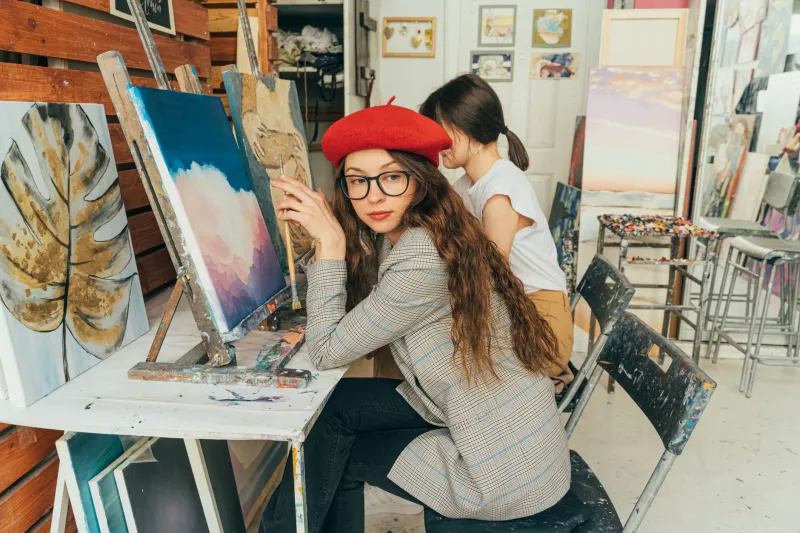
There is a persistent myth about artistic creation — that it arrives fully formed, summoned by inspiration in a single electric moment. The reality, for virtually every artist whose work endures, is considerably more demanding, more iterative, and more fascinating than that romantic narrative suggests.
For collectors and enthusiasts who have ever stood before a work that seemed to hum with a life of its own, the question of how such a thing comes into being is not merely academic. Understanding the creative process — its disciplines, its detours, and its defining decisions — transforms the experience of collecting from passive acquisition into genuine dialogue with the maker.
The Studio as Laboratory
The working studio of a serious artist bears little resemblance to the pristine, light-filled spaces that populate design magazines. It is, at its most functional, a laboratory: a place where hypotheses are tested, failures are studied, and breakthroughs emerge from accumulated experimentation rather than sudden revelation.
In 2024, the studio environment itself has become a subject of renewed conversation among artists and critics alike. As digital tools have proliferated and the boundaries between physical and virtual image-making have blurred, many artists have responded by deepening their commitment to process-intensive, handmade work — not out of nostalgia, but out of a conviction that the irreducible presence of the human hand carries meaning that no algorithm can replicate.
Adam Burke's studio practice reflects this orientation. The development of each composition begins not at the canvas, but in a sustained period of observational drawing and reference gathering — a phase that might last days or weeks before a single mark is committed to the primary support. This preliminary discipline is not incidental to the work; it is the work's foundation, the invisible architecture upon which every subsequent decision rests.
Inspiration Is a Habit, Not a Lightning Bolt
One of the most clarifying things an artist can tell a collector is this: inspiration is not a visitation. It is a practice, cultivated through consistent exposure to the world — its light, its textures, its human drama — and through an ongoing, often private conversation with the history of art that preceded you.
For Burke, the sources of visual inspiration are deliberately eclectic. The chromatic strategies of the Ashcan School sit in productive tension with the compositional rigor of Northern Renaissance masters. Contemporary illustration and graphic design inform decisions about edge and silhouette. The natural world — particularly the quality of American light across different seasons and geographies — provides an inexhaustible reservoir of raw material.
What distinguishes the visionary artist from the merely skilled technician is not the breadth of these influences, but the depth of their digestion. The artist who has truly internalized a range of historical and contemporary references does not quote them; they metabolize them, producing work that feels simultaneously rooted and original. Collectors who develop an eye for this quality — who learn to recognize the difference between competent pastiche and genuine synthesis — find that their acquisitions grow more meaningful, and more valuable, over time.
The Role of Failure in Finished Work
Every artist of substance maintains a complicated relationship with failure. Not the failure of technical execution — though that, too, is part of the story — but the more fundamental failure of a composition to achieve what the artist originally envisioned.
This gap between intention and outcome is not a problem to be solved. It is, paradoxically, one of the primary engines of artistic development. The painting that refuses to resolve on its own terms forces the artist to make decisions they might never have considered in a more cooperative creative moment. Some of the most distinctive formal choices in any artist's body of work originated in a moment of apparent failure — a passage that wouldn't behave, a color relationship that seemed wrong until it became unmistakably right.
For collectors, understanding this dimension of the creative process reframes what they are acquiring when they purchase an original work. They are not buying a product; they are acquiring the physical record of a sustained negotiation between an artist's vision and the resistant materiality of their chosen medium. That negotiation is visible in the surface of the work — in the pentimento, the reworked passages, the areas of decisive mark-making — for anyone who knows how to look.
Technique as Language, Not Decoration
In contemporary art discourse, technique is sometimes treated as a secondary concern — a craft consideration subordinate to conceptual ambition. This is a false hierarchy, and the most compelling artists working today understand it as such.
Technique, at its deepest level, is not decoration. It is the specific vocabulary through which an artist's vision is made legible to others. The way Burke handles the transition between light and shadow, the particular quality of his drawn line, the considered restraint of his palette — these are not stylistic affectations. They are the precise instruments through which meaning is communicated, and they are the result of years of deliberate practice and ongoing refinement.
For collectors evaluating original works, technical fluency is one of the most reliable indicators of an artist's long-term trajectory. An artist who has genuinely mastered their medium has the tools to continue developing, to surprise both themselves and their audience, to produce bodies of work that evolve in ways that sustain collector engagement across decades rather than seasons.
What 2024 Demands of the Serious Artist
The current cultural moment places distinctive pressures on artists who are committed to the long game. Social media platforms reward immediacy and legibility over depth and complexity. The market, at certain levels, gravitates toward work that photographs well rather than work that rewards sustained physical encounter. The temptation to optimize for visibility rather than vision is real, and it has claimed more than a few promising practices.
The artists who are navigating this environment most successfully are those who have developed a clear sense of what their work is for — not in a programmatic or didactic sense, but in terms of the specific kind of attention and experience they are trying to create for the viewer. This clarity of purpose is not rigidity; it is the stable center from which genuine experimentation becomes possible.
For collectors who are building collections with both personal and financial intentionality, this quality of artistic conviction is perhaps the most important thing to seek. Technical skill can be learned. Conceptual frameworks can be adopted. But the particular combination of visual intelligence, disciplined craft, and authentic vision that makes a body of work genuinely matter — that is rarer, and ultimately more valuable, than any single impressive canvas.
The Collector as Witness
There is a final dimension to the creative process that deserves acknowledgment: the role of the collector as participant. When a serious collector acquires an original work and lives with it over time — studying it across different moods and seasons, returning to it with fresh eyes after months of other visual experience — they complete a circuit that began in the studio.
The work continues to develop meaning in the presence of an attentive viewer. This is not a metaphor. It is a material reality of what original art is and does. For collectors who understand this, the studio process is not a remote, mysterious event that precedes their involvement. It is the beginning of a conversation that, with the right work, never quite ends.