Beyond the Stock Market: How Discerning Collectors Are Turning Original Art Into a Cornerstone of Modern Wealth Strategy
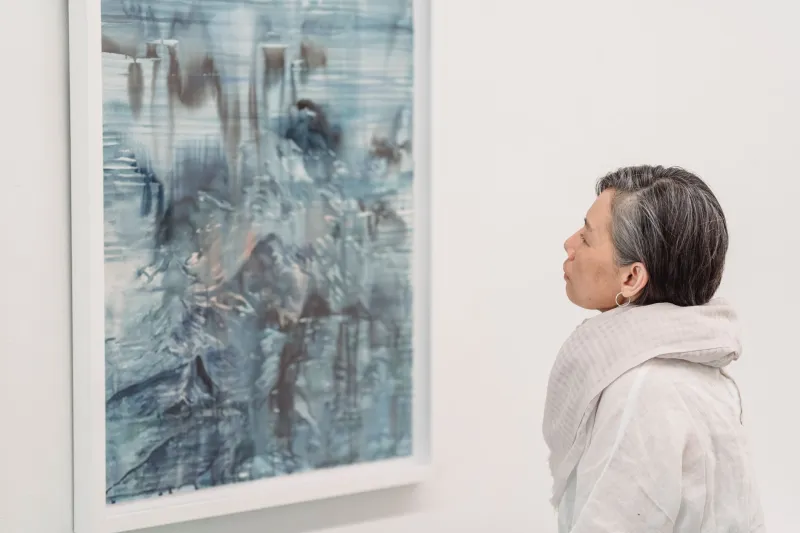
For generations, the American investor's playbook followed a familiar script: diversify across equities, hold bonds as a hedge, perhaps acquire a piece of real estate, and repeat. Yet over the past decade, a quieter revolution has been unfolding in the world of high-net-worth collecting — one that takes place not on trading floors or in boardrooms, but inside galleries, studios, and the private homes of individuals who have always understood that the finest things in life can also be the most financially astute.
Original artwork, once considered the exclusive domain of the ultra-wealthy or the purely passion-driven, has matured into a legitimate and increasingly sophisticated asset class. And for those who approach collecting with both an educated eye and a long-range financial sensibility, the rewards extend well beyond aesthetic pleasure.
The Numbers Behind the Canvas
The global art market generated an estimated $65 billion in sales in 2023, according to the Art Basel and UBS Global Art Market Report — a figure that underscores just how seriously institutional and individual investors alike have come to regard original works. While blue-chip names like Basquiat or Koons command headlines, the more instructive story lies in the mid-market and emerging tiers, where savvy collectors have historically found the most asymmetric opportunities.
Unlike publicly traded securities, original art does not correlate directly with stock market volatility. During periods of economic turbulence, tangible assets — particularly those with cultural resonance and scarcity — have demonstrated a remarkable capacity to hold, and in many cases appreciate, in value. The Mei Moses indices, which track repeat auction sales of fine art, have shown that over multi-decade horizons, art returns have been broadly competitive with equities, while offering the additional benefit of portfolio non-correlation.
For the discerning collector, this is not merely a theoretical proposition. It is a practical framework for building wealth that is as personally meaningful as it is financially sound.
Scarcity, Provenance, and the Emerging Artist Advantage
One of the most compelling arguments for collecting original works — as opposed to prints, reproductions, or digital derivatives — centers on the concept of irreplaceability. A unique painting or sculpture exists in a way that a share of stock simply cannot: it occupies physical space, carries the direct mark of its creator's hand, and accumulates a provenance that grows richer with each decade it survives.
This is precisely where emerging and mid-career artists represent a particularly compelling opportunity. Collectors who identified the early works of artists now considered canonical — think of those who acquired Cy Twombly in the 1960s or Elizabeth Murray in the 1980s — did so not through financial calculation alone, but through a cultivated sensitivity to artistic vision and technical mastery that preceded broader market recognition.
Today, that same opportunity presents itself to collectors willing to engage seriously with living artists whose bodies of work are still in formation. Original compositions by artists operating at the intersection of technical discipline and genuine conceptual depth offer a dual proposition: the immediate pleasure of living with exceptional work, and the long-term potential for meaningful appreciation as institutional and critical recognition follows.
Adam Burke's practice exemplifies this dynamic. Working with a commitment to craft and a distinctive visual language that resists easy categorization, Burke's original works occupy a space that serious collectors have increasingly come to value: grounded in tradition, yet unmistakably contemporary in sensibility.
Portfolio Thinking for the Modern Collector
The most sophisticated collectors today do not think of individual acquisitions in isolation. They think in terms of bodies of work, thematic coherence, and the narrative arc of an artist's development over time. Acquiring multiple works by a single artist at different stages of their career — particularly during periods before widespread critical recognition — has historically proven to be one of the most effective strategies for both personal and financial enrichment.
This portfolio mentality extends to diversification across media, scale, and subject matter. A collection that includes works on paper alongside large-format canvases, or that spans different periods of a single artist's output, creates a more resilient and intellectually engaging whole than a series of disconnected acquisitions driven purely by market momentum.
For American collectors in particular, there is also the question of cultural investment. Supporting living artists — especially those whose work reflects a distinctly American creative tradition — carries a dimension of civic and cultural stewardship that no financial instrument can replicate. The collector who acquires an original Burke composition is not merely purchasing an asset; they are participating in the ongoing story of American art.
Due Diligence: What Separates a Collection from a Stockpile
Of course, approaching art as an investment demands the same rigor one would apply to any significant financial decision. Provenance research, condition assessment, exhibition history, and an understanding of an artist's critical trajectory are all essential components of informed acquisition.
Working directly with artists and their representatives — rather than through secondary market intermediaries alone — often provides both financial advantages and deeper contextual understanding. When a collector acquires a work directly from the studio, they gain insight into the creative process, the artist's intentions, and the place of that specific work within a larger body of output. This knowledge is not merely interesting; it is materially relevant to the long-term value of the acquisition.
Additionally, the tax landscape for art collectors in the United States has evolved in ways that reward thoughtful planning. Charitable donations of appreciated artwork, estate planning strategies involving collections, and the treatment of art under qualified opportunity zone investments are all areas where collectors benefit from engaging advisors who understand the intersection of art and finance.
The Passion Premium
Perhaps the most honest argument for building a collection around original works is the simplest one: you live with them. Unlike a brokerage account statement, an original painting greets you each morning, shifts in character with the changing light, and rewards sustained attention with new layers of meaning. The financial case for art collecting is real and increasingly well-documented — but it is ultimately secondary to the irreplaceable experience of sharing a domestic or professional space with work of genuine artistic ambition.
For the discerning collector who approaches acquisition with both emotional intelligence and financial acuity, original art offers something that no other asset class can: a return that is simultaneously measurable in dollars and immeasurable in meaning. That, in the end, is the most compelling investment case of all.