What the Artist Chose to Keep: The Hidden Works That Define a Creative Life
There is a particular kind of courage that receives almost no recognition in the art world: the courage to withhold. Every artist of genuine ambition maintains a private inventory—works that have never been photographed for a portfolio, never hung in a gallery, never offered to even the most trusted patron. These pieces exist in a space between creation and completion, held back not from carelessness but from a deliberate, often agonizing act of judgment. For collectors who wish to understand the artists they support, this hidden body of work is not a footnote. It is, in many ways, the truest measure of who that artist is.
The Studio as Sanctuary and Tribunal
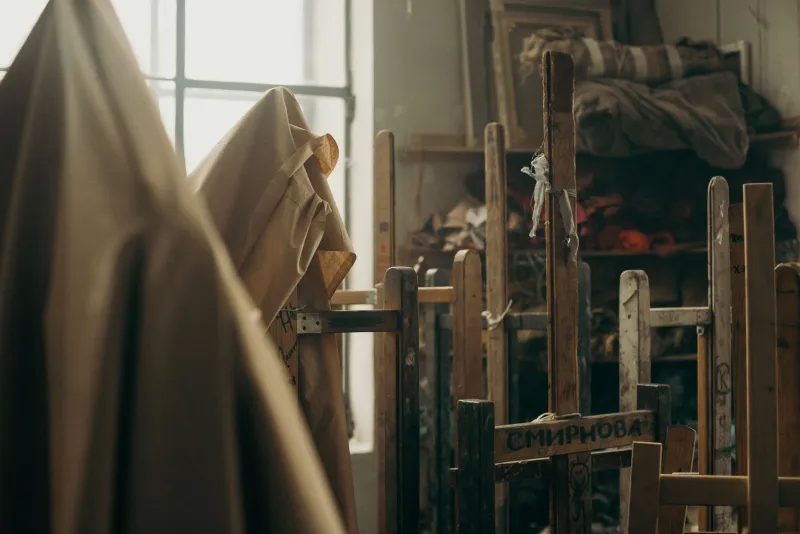
Most people who collect original art encounter it in curated contexts—the gallery opening, the art fair booth, the carefully composed studio visit designed to present work at its most resolved. What they rarely witness is the studio in its more honest state: canvases turned toward the wall, sculptures covered with cloth, drawings filed away in flat files that may not be opened for years. These sequestered works are not failures in any conventional sense. Many of them represent some of the most emotionally raw and technically adventurous things an artist has ever attempted.
The decision to withhold a work is rarely made lightly. It emerges from a private calculus that weighs vulnerability against readiness, ambition against execution, the artist's present self against the vision that initially compelled the piece into existence. When an artist looks at a finished canvas and concludes that the world is not yet prepared for it—or, more honestly, that they themselves are not yet prepared to defend it—that judgment reflects an integrity that no market incentive can replicate.
Commercial Pressure and the Temptation to Release
The art market, particularly in the United States, operates on rhythms that are not always sympathetic to artistic deliberation. Galleries need inventory. Collectors grow impatient between shows. Social media demands a constant stream of new imagery. The pressure to produce, to exhibit, and to sell is relentless, and it bears down most heavily on artists who are still establishing themselves—those for whom a single strong sale might mean six months of financial stability.
Against this backdrop, the act of choosing not to release a work becomes almost radical. It signals that the artist has internalized a standard that exists independently of external validation. It suggests a willingness to absorb financial sacrifice in service of something harder to quantify: the integrity of a body of work considered as a whole. When a painter slides a canvas into storage rather than send it to a dealer who would happily place it, that decision says something profound about their relationship to their own practice.
For collectors, recognizing this dynamic reframes what it means to own work by a serious artist. The pieces available for acquisition represent not merely what was created, but what survived a rigorous internal review. That filter, invisible to the buyer, is part of what gives the work its value.
What Held-Back Work Reveals About Artistic Vision
Studying the withheld work of historically significant artists—when it eventually surfaces through estate sales, retrospective exhibitions, or scholarly research—consistently reveals the same pattern: the pieces an artist chose not to release were often the most formally experimental, the most emotionally exposed, or the most conceptually forward of their career. Francis Bacon destroyed work prolifically. Giorgio Morandi kept paintings in his studio for decades before considering them finished. In American art history, figures like Agnes Martin were known for a rigorous self-editing practice that shaped the austere, luminous quality of everything she allowed into public view.
This is not coincidence. The works an artist holds back frequently represent the frontier of their thinking—ideas that arrived before the technical or emotional language to support them had fully developed. They are evidence of an artist reaching beyond their current grasp, which is precisely the condition that produces genuine advancement. When that frontier work eventually becomes visible, either during the artist's lifetime or after, it often recontextualizes everything that preceded it, revealing a through-line of intention that was invisible from the outside.
What Collectors Can Learn from the Work They Cannot Buy
For the discerning collector, awareness of an artist's withheld work—even without direct access to it—serves as a meaningful lens for evaluating the work that is available. An artist who speaks candidly about the pieces they have chosen not to release, and who can articulate why, demonstrates a quality of self-awareness that is exceedingly rare. It suggests that the work being offered has genuinely passed an internal threshold, rather than simply meeting a market deadline.
Conversely, an artist who seems to release everything with equal enthusiasm, who treats every canvas as ready the moment it is dry, may be responding more to commercial pressure than to artistic judgment. This is not a moral failing, but it is a meaningful distinction for collectors who are building a collection intended to endure.
Studio visits, when conducted with genuine curiosity rather than as a purchasing exercise, sometimes offer glimpses into this private archive. An artist who shows a collector work they are not yet selling—and explains why—is extending a form of trust that transcends any transaction. That conversation, about the gap between where a work is and where the artist needs it to be, is among the most instructive a collector can have.
The Long Arc of Artistic Integrity
There is a longer argument embedded in all of this, one that concerns the nature of artistic legacy. Collections built around artists who maintain rigorous internal standards tend to age well, not merely because the work is technically accomplished, but because it was made by someone who understood the difference between what they could sell and what they should release. That distinction, exercised consistently over a career, is what separates a body of work from a catalogue of product.
For collectors who approach acquisition as more than investment—who are genuinely drawn to the life of the mind that serious art represents—the hidden work is a reminder that what they own is already the result of someone else's most demanding judgment. The artist looked at this piece and decided the world was ready for it. That decision, made in private, against considerable pressure, is inseparable from the object itself.
In the end, what an artist chooses to keep may matter as much as what they choose to share. The withheld work is not absence. It is a form of presence—evidence of a creative life lived on its own terms, answerable to a standard that no gallery price list has ever been able to set.