What the Heart Knows That the Market Does Not: The Case for Collecting from Genuine Connection
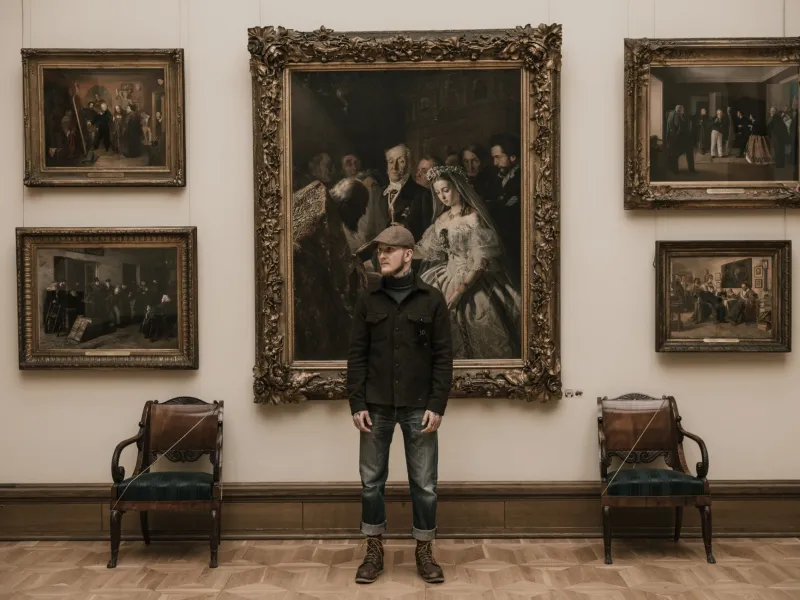
There is a particular kind of collector who arrives at a gallery with a printed list of artists whose auction trajectories are trending favorably, whose names appear in the right publications, whose gallerists have cultivated the right institutional relationships. This collector is not without intelligence. But they are, in a very specific and consequential sense, looking in the wrong direction.
The collectors whose acquisitions ultimately define both their personal legacy and their financial returns are rarely those who entered the room armed primarily with market data. They are the ones who stood in front of a painting and felt something shift—something that could not be quantified, justified to a committee, or confirmed by a secondary-market index. They bought because they had to. And more often than not, that instinct proved to be the most sophisticated curatorial tool available.
The Limits of Market Logic
It is worth being precise about what market analysis can and cannot do for a collector. Price history, auction results, gallery representation, and institutional acquisition records are all genuinely useful forms of information. They offer context, signal professional consensus, and help a collector understand where an artist stands within the broader landscape of contemporary practice. None of this should be dismissed.
What market data cannot do, however, is identify the work that will matter in twenty years. Art history is not made by consensus; it is made by rupture, by revision, and by the stubborn persistence of artists whose vision outpaced the appetite of their contemporaries. The collector who relies exclusively on market signals is, by definition, always arriving after the fact—purchasing validation rather than vision.
This distinction carries real financial consequences. The collectors who acquired Mark Rothko's work in the 1950s were not following a trend; they were responding to paintings that most of the established art world regarded with suspicion. The collectors who championed Agnes Martin through the 1960s and early 1970s were not acting on strong auction data—there was almost none. They were acting on something quieter and more durable: the conviction that the work was genuinely extraordinary.
What Early Championing Actually Looks Like
Consider the arc of an artist like Kerry James Marshall, whose decades-long commitment to representing Black figuration within the tradition of Western painting was met, for much of his career, with critical admiration but limited market enthusiasm. The collectors who acquired his work during those years were not speculating on an emerging trend. They were responding to paintings that made profound demands on the viewer—work that was historically literate, formally rigorous, and emotionally insistent in equal measure.
When Marshall's 2016 retrospective at the Museum of Contemporary Art Chicago and subsequent venues reframed his position in the canon, the market responded accordingly. His 2018 auction record—Past Times selling for over $21 million—did not create his significance. It confirmed what attentive collectors had understood for years through the more reliable instrument of direct experience.
This pattern repeats itself with notable consistency across American art history. The collectors who built relationships with artists early, who acquired work because they found it genuinely compelling rather than strategically promising, are the ones who now hold collections of both cultural and financial consequence.
Trusting the Instinct Without Abandoning the Intellect
Advocating for emotional connection as a collecting principle is not an argument for impulsiveness or the abandonment of critical thinking. The most effective collectors develop what might be called an educated intuition—a response that is simultaneously felt and informed, visceral and historically grounded.
This means looking seriously and repeatedly. It means visiting studios, reading about an artist's influences and intentions, understanding where their practice sits within the broader conversation of contemporary art. It means developing the kind of sustained attention that allows you to distinguish between a work that is merely fashionable and one that possesses genuine staying power.
But it also means being willing to trust the moment when a work stops you. When you find yourself returning to the same image in your mind three days after encountering it. When you cannot fully articulate why a particular piece feels necessary, but the feeling itself is undeniable. These are not signs of naivety. They are signs that your eye is functioning as it should.
The Practical Case for Emotional Conviction
Beyond the philosophical argument, there is a practical one. Collections built on genuine personal resonance tend to be more coherent, more distinctive, and ultimately more interesting to the institutions and curators who will one day assess their significance. A collection that reflects authentic engagement with ideas and aesthetics tells a story. A collection assembled primarily to mirror market consensus tells very little.
Museums and serious private foundations that seek to acquire or partner with private collections are drawn to precisely this quality. They are looking for evidence of a collector's sustained point of view—a set of choices that reveal genuine discernment rather than the ability to follow advice well. The collector who can articulate why they were drawn to an artist before the market arrived is the collector whose eye commands respect.
There is also the matter of resilience. Markets fluctuate. Trends reverse. Artists who are fashionable in one decade can become unfashionable in the next, and those who acquired work primarily for its perceived investment profile often find themselves holding pieces they neither love nor understand. The collector who bought from conviction, by contrast, holds something that retains its meaning regardless of what any auction house reports in a given season.
A Different Kind of Due Diligence
The most useful form of due diligence a collector can perform is not exclusively financial—it is experiential. Spend time with the work. Return to it. Bring your most skeptical attention and see whether the piece survives it. Ask yourself not only whether this artist is being discussed in the right circles, but whether the work itself continues to reveal something new each time you encounter it.
This is the standard that the greatest collections are held to, and it is the standard that separates the collector whose acquisitions endure from the one whose purchases merely reflect the anxieties of a particular market moment.
The spreadsheet has its place. But the eye—trained, patient, and willing to be moved—remains the instrument that matters most.