The Stewardship Imperative: Protecting Original Art in an Age of Environmental Uncertainty
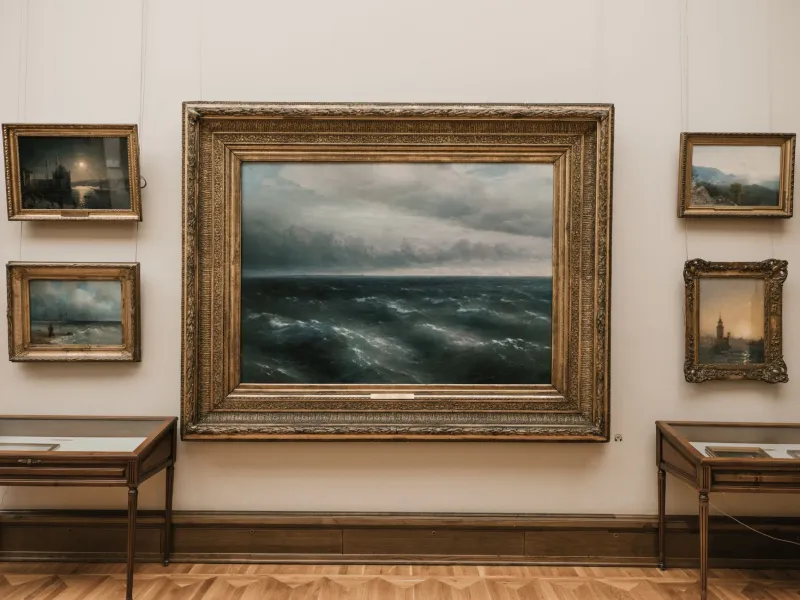
A painting is not a static object. It breathes, expands, contracts, and responds—sometimes imperceptibly, sometimes catastrophically—to the environment in which it lives. The canvas shifts with humidity. The paint layer responds to temperature fluctuation. Light, over time, does its quiet work on pigment, varnish, and paper alike. These are not new concerns; conservators have understood them for centuries. What is new is the scale and unpredictability of the environmental pressures that collectors now face, and the heightened urgency they bring to questions of long-term stewardship.
For the serious collector, preservation is not an afterthought. It is, in many respects, the obligation that comes with ownership—and one that demands both practical knowledge and a certain philosophical clarity about what it means to hold a work of art in trust.
Understanding What You Own
The first step in any meaningful preservation strategy is a thorough understanding of the materials involved. Different media carry different vulnerabilities. Oil on linen behaves differently than oil on panel. Works on paper—watercolors, drawings, prints—are among the most sensitive objects in any collection, susceptible to both light damage and fluctuations in relative humidity. Photographs, particularly those produced through analog processes, require conditions that differ significantly from those appropriate for paintings. Contemporary works incorporating organic materials, found objects, or mixed media introduce preservation challenges that standard frameworks do not always address.
Collectors acquiring works from living artists are well-positioned to ask directly about materials and their known vulnerabilities. A responsible artist will provide documentation—ideally in writing—describing the media used, any known sensitivities, and recommendations for display and storage. This information should be preserved alongside the work's provenance records and treated as part of its permanent documentation.
The Climate Question
Environmental stability is the foundation of sound preservation. The standard recommendation—a relative humidity of 45 to 55 percent and a temperature range of 65 to 70 degrees Fahrenheit—reflects decades of conservation research and remains the benchmark for most collections. However, maintaining these conditions consistently has become more challenging in regions of the United States experiencing increasingly variable weather patterns, prolonged drought cycles, or more frequent extreme heat events.
For collectors in affected areas, several interventions merit consideration:
Dedicated HVAC with humidity control. Residential HVAC systems are not designed with art preservation in mind. A conservator or building specialist can assess whether supplemental humidity control—through whole-home humidifiers or dehumidifiers integrated into the existing system—is warranted.
Passive buffering through thoughtful installation. Hanging works away from exterior walls, heating vents, and direct sunlight reduces exposure to the most damaging environmental fluctuations. Interior walls, particularly those with thermal mass, provide more stable microclimates.
Data monitoring. Inexpensive digital hygrometers placed near significant works allow collectors to track conditions over time and identify problematic patterns before damage occurs. More sophisticated wireless monitoring systems are now available at accessible price points.
Light: The Invisible Threat
Of all the environmental factors that affect original art, light is perhaps the most insidious because its damage accumulates invisibly and is entirely irreversible. Ultraviolet radiation is the primary agent of photochemical degradation, but visible light causes harm as well—particularly to organic dyes, watercolors, and certain historic pigments.
UV-filtering glazing, available for both framing and windows, reduces exposure substantially without significantly affecting the appearance of a work. LED lighting, which produces minimal UV and infrared radiation compared to halogen or incandescent sources, has become the preferred choice for residential display. Collectors who illuminate works with adjustable track lighting should ensure that fixtures are positioned to minimize heat accumulation at the picture surface.
For works on paper, the calculus is particularly demanding. Many conservators recommend rotating these pieces in and out of display—a practice that acknowledges both the fragility of the medium and the reality that indefinite exhibition is incompatible with long-term preservation.
Professional Conservation: When and Why
No collection of meaningful scope should exist without a relationship with a qualified conservator. The American Institute for Conservation maintains a directory of credentialed professionals organized by specialty and geography—a resource that deserves to be in every serious collector's files.
Conservators serve multiple functions: they conduct condition assessments, advise on storage and display, undertake treatment when damage has occurred, and provide documentation that supports both insurance valuation and future sale. A periodic condition review—ideally every five to ten years for stable works, more frequently for vulnerable ones—is a reasonable standard of care.
Insurance, too, requires attention. Standard homeowner's policies are rarely adequate for collections of significant value. Specialized fine art policies offer agreed-value coverage, broader coverage for transit and loan, and access to conservation expertise following a loss event.
The Philosophical Dimension
Beyond the technical, there is a question that every serious collector eventually confronts: for whom, exactly, is this work being preserved? The answer shapes not only practical decisions but the entire orientation of a collecting practice.
To steward a work of art is to participate in an act of cultural continuity—to acknowledge that the object in your care carries meaning that extends beyond your own relationship with it. The paintings that now hang in major American museums arrived there through chains of private ownership, each link of which involved someone who chose, at some cost and with some effort, to maintain the work's integrity. That tradition of care is itself a form of contribution to the broader cultural record.
In an era of genuine environmental uncertainty, that responsibility feels both more pressing and more meaningful. The collector who takes preservation seriously is not merely protecting an investment. They are making a considered argument, through action, that these objects—and the human capacity for expression they embody—are worth the effort of continuity.